Centro Cultural Recoleta, marzo 2025
Lucía Sorans (Buenos Aires, 1983) investiga las interrelaciones entre cuerpo, territorio y pintura, utilizando tierras y arcillas recolectadas de diversas geografías de Argentina. Alejada de los pigmentos industriales, como el óleo con el cual desarrolló casi toda su obra anterior, la artista trabaja con elementos orgánicos creando sus pigmentos artesanalmente e integrando su práctica como una forma de mediumnidad. A través del tamizado, molienda y mezcla, el material se convierte en fuente e instrumento para desplegar una dimensión tanto sensorial como conceptual.
Con más de 50 muestras recolectadas de distintas regiones, cada arcilla pareciera cargar con significados que le son propios: las tierras mapuches del Parque Nacional Lanín en Neuquén, las tierras huarpes de las Lagunas de Guanacache en San Luis, San Juan y Mendoza, las arcillas del Cerro Uritorco y Traslasierra de Córdoba, y las tierras obtenidas de los ríos de la Provincia de Buenos Aires. Cada suelo, con su color, textura y temperatura particulares, se convierte en una presencia tangible y atemporal del territorio del que proviene, llevando consigo las visiones íntimas de cada geografía que la artista en su práctica, vuelve imagen.
Sorans crea laberintos personales construidos de la relación entre las características físicas y simbólicas de los suelos. En su proceso de pintura, el cuerpo de la artista se convierte en mediador entre la tierra y el lienzo o papel estableciendo una conexión atávica. En la tensión entre el fragor y la quietud, las pinturas pueden entenderse como traducciones de memorias territoriales: el eco de una laguna, volcanes durmiendo la siesta, espacios ceremoniales y entidades se aparecen en atmósferas que evocan tiempos pasados remotos como turbulencias contemporáneos.
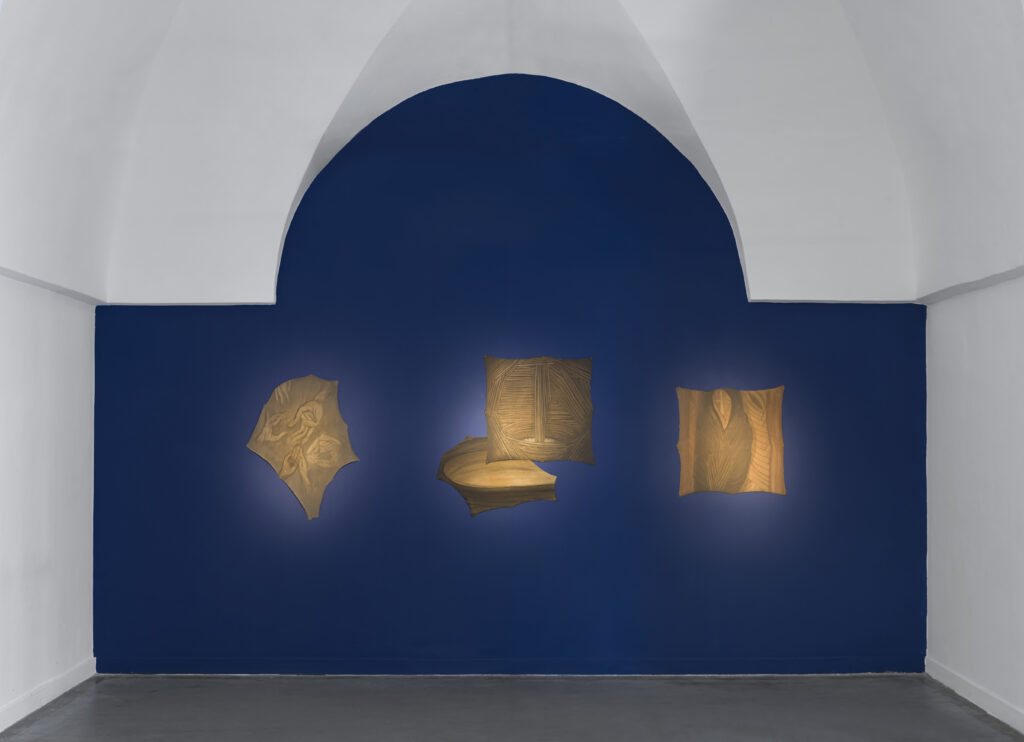
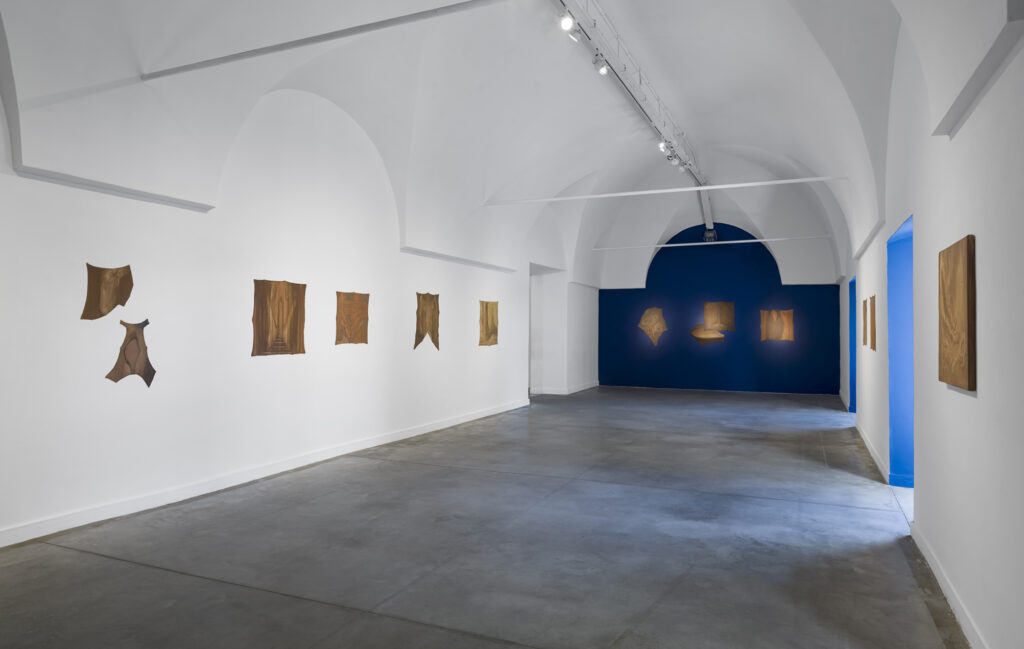
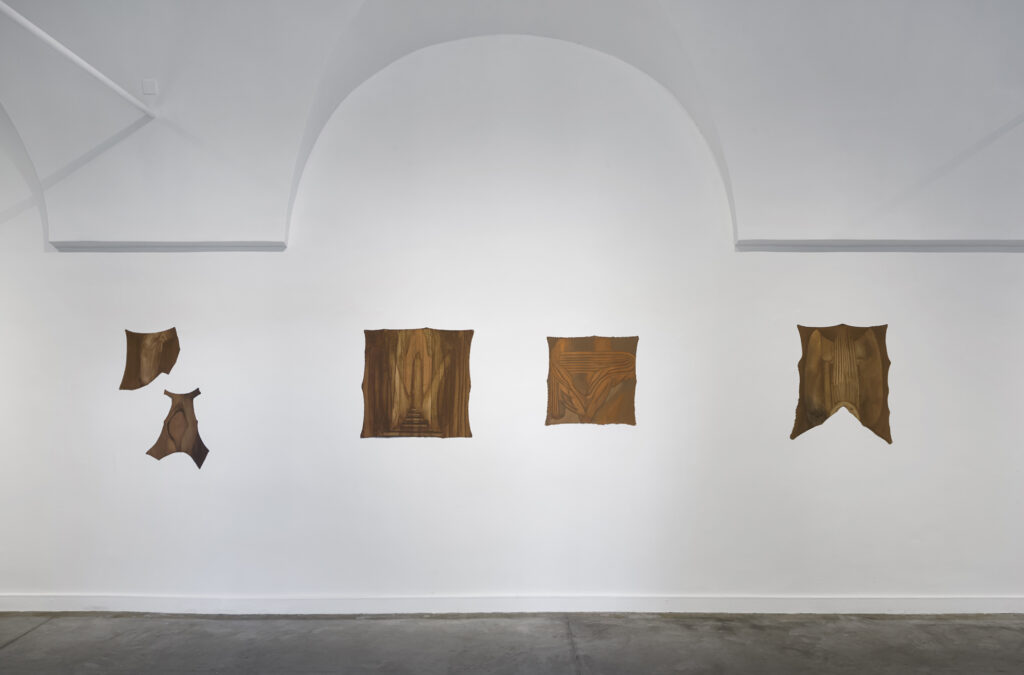
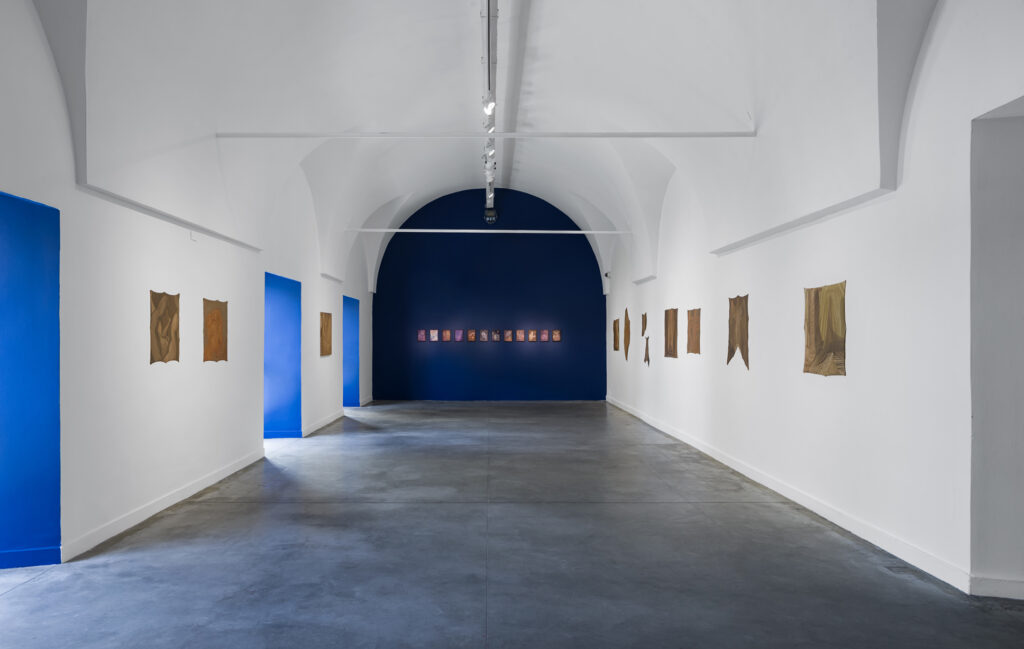
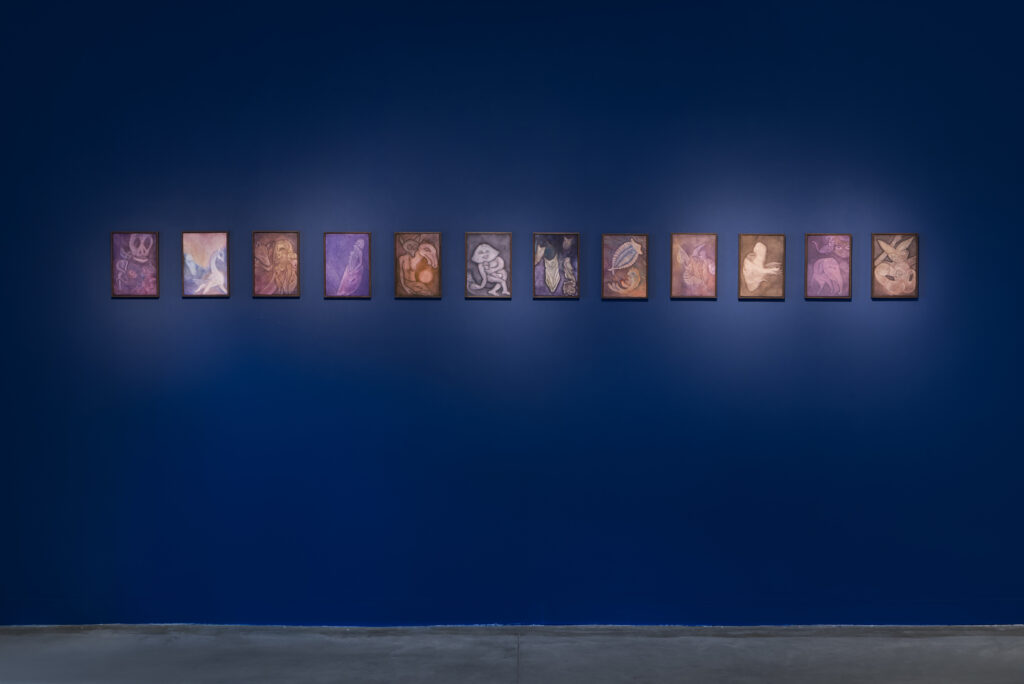
PH Fabián Cañas
Mineral soul
Lucía Sorans
Lucía Sorans (Buenos Aires, 1983) explores the relationships between the body,
territory, and painting using earths and clays she collects from different areas of
Argentina. Moving away from industrial pigments such as the oils she used in most of
her previous work, the artist works with organic elements, using artisanal techniques
to make her pigments and integrating them into her practice as a medium in
themselves. Through filtration, grinding and mixtures the material becomes both a
source and a tool with which to add conceptual and sensory dimensions.
Using over 50 samples from different regions, each clay is loaded with the significance
of its geography: the Mapuche lands in Parque Nacional Lanín, Neuquén, the Huarpe
land of the Lagunas de Guanacache in San Luis, San Juan and Mendoza, the clays of
Cerro Uritorco and Traslasierra in Córdoba, and earths obtained from the rivers of the
Province of Buenos Aires. Each soil, with its distinctive colour, texture and
temperature, conjures the tangible, atemporal presence of the territory from which it
comes, enhancing the artist’s personal vision of the land converted into images.
Sorans creates personal labyrinths out of the physical and symbolic characteristics of
the soils and their interactions. Her painting process makes the artist’s body a
mediator between the earth and the canvas or paper, establishing an atavistic
connection. In the tension between stillness and noise, the paintings can be seen as
translations of territorial memories: the echo of a lagoon, napping volcanoes,
ceremonial spaces and entities appearing in atmospheres that evoke both the remote
past and contemporary turmoil.